
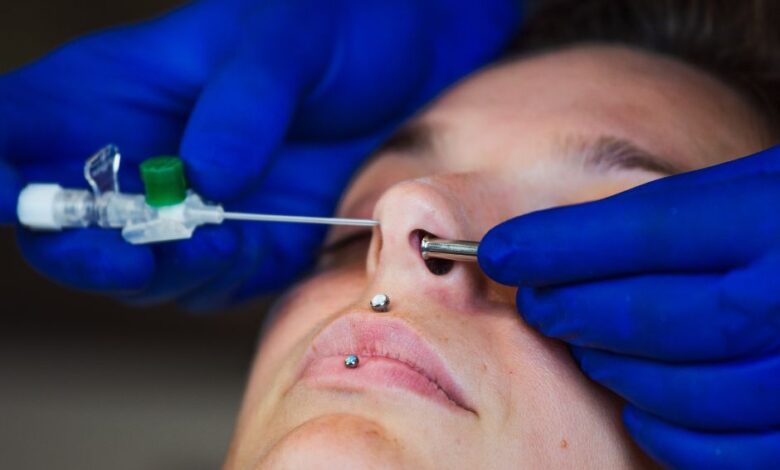
Getting your nose pierced can be exciting — it’s a bold way to express your style. But sometimes, even with proper care, a nose piercing can become infected. Redness, swelling, tenderness, or discharge are all signs that something isn’t right.
The good news? Most mild infections can be treated at home if you act quickly and follow the right steps.
In this guide, we’ll go through five simple, dermatologist-approved tips to help you heal your infected nose piercing safely and prevent future problems.
how to treat an infected nose piercing
5 simple, dermatologist-approved tips to clean, heal, and prevent nose piercing infections safely at home. ?
1. Clean the Area Twice a Day
Use a saline solution or a piercing aftercare spray to clean the area around your piercing. Avoid alcohol or hydrogen peroxide — they can dry out your skin and delay healing.
Gently soak a clean cotton pad in saline, press it against the piercing for 3–5 minutes, then pat dry with a paper towel.
💡 Pro tip: Make your own saline at home by mixing 1/4 teaspoon of non-iodized salt in 1 cup of warm distilled water.
2. Don’t Remove the Jewelry
Unless advised by a professional, don’t take out the jewelry. Removing it can trap the infection inside and cause the hole to close, worsening inflammation.
Instead, keep the jewelry in place so the wound can drain and heal naturally.
3. Avoid Touching or Twisting
Touching your piercing with dirty hands introduces more bacteria. Always wash your hands before any contact, and avoid twisting or rotating the jewelry — this can irritate the wound further.
4. Apply a Warm Compress
A warm compress helps reduce pain, swelling, and pus buildup.
Soak a clean cloth in warm saline water and gently press it against the piercing for 5–10 minutes, twice daily. This improves circulation and speeds up healing.
5. Know When to See a Professional
If you notice severe swelling, thick yellow or green pus, or fever, see a doctor or professional piercer right away. You may need antibiotic treatment.
Never try to pop or squeeze the infection — it can spread bacteria deeper into the skin.
How to Prevent Future Infections
-
Choose a reputable piercing studio that uses sterile equipment.
-
Avoid swimming pools or makeup near the new piercing for the first few weeks.
-
Keep up with daily cleaning until it’s fully healed (usually 2–3 months).
Conclusion
A nose piercing infection can be stressful, but with proper care and quick action, it usually heals without complications. Stick to gentle cleaning, avoid irritation, and seek help early if needed — your piercing will be back to looking great in no time!