
Quick Verdict (Review Summary)
Overall rating: ⭐⭐⭐⭐⭐ (5/5)
Best for
-
Daily skin protection
-
Preventing sun damage
-
Supporting any skincare routine
Not ideal for
-
Skipping because of texture — today there is a sunscreen formula for every skin type.
Sunscreen is widely considered the most important skincare product for protecting skin from sun-related damage and premature aging.
What Sunscreen Is (Plain English)
Sunscreen protects the skin from harmful UV radiation.
Two main types exist:
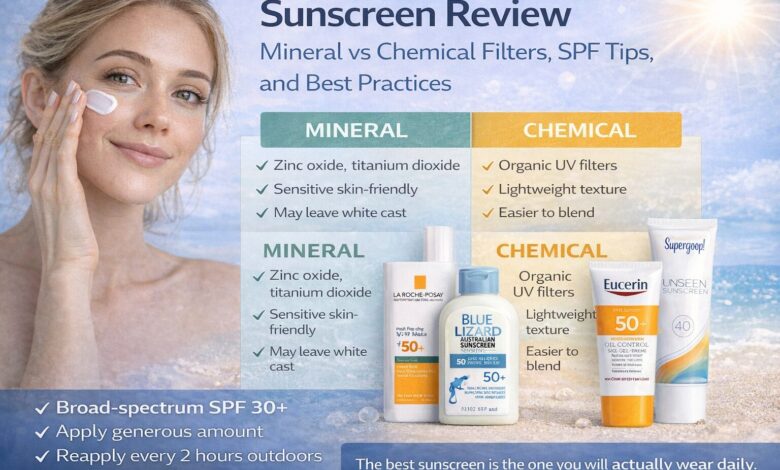
Mineral sunscreen
-
Uses filters like zinc oxide and titanium dioxide
-
Sits on the skin surface and reflects UV light
-
Often better tolerated by sensitive skin
Chemical sunscreen
-
Uses organic UV filters
-
Absorbs UV radiation and converts it into heat
-
Usually lighter and easier to blend
The best sunscreen is simply the one you will apply every day.
Benefits: What Sunscreen Can and Can’t Do
What Sunscreen Can Help With
-
Preventing new dark spots
-
Protecting results from retinol or exfoliants
-
Reducing visible signs of photoaging
-
Protecting against sunburn
What Sunscreen Cannot Do
-
Completely fix existing pigmentation
-
Replace other treatment ingredients
For visible results, sunscreen should be used consistently with other skincare treatments.
Who Should Use Sunscreen
Sunscreen is recommended for all skin types.
Choosing the right texture can improve comfort:
Oily skin
-
Lightweight gel sunscreen
-
Matte finish formulas
Dry skin
-
Cream sunscreen
-
Hydrating formulas
Sensitive skin
-
Mineral sunscreens are often better tolerated
-
May cause less irritation around the eyes
However, mineral formulas sometimes leave a white cast depending on skin tone.
How to Use Sunscreen Correctly
Sunscreen should be applied as the final step in your morning routine.
Basic routine
Cleanser → Serum → Moisturizer → Sunscreen
Application tips
-
Apply a generous amount to face and neck
-
Many people apply too little
-
Reapply every 2 hours when outdoors
-
Reapply after swimming or sweating
Even on cloudy days, UV radiation can still affect the skin.
What Not to Mix (Or How to Layer Safely)
Sunscreen should always be applied after skincare products.
Helpful layering tips:
-
Allow moisturizer to absorb before applying sunscreen
-
Apply vitamin C under sunscreen for antioxidant support
-
If you use retinol at night, sunscreen in the morning is essential
This helps protect skin that may be more sensitive to sunlight.
Possible Side Effects
Some people may experience:
-
Eye stinging
-
Breakouts from heavy formulas
-
White cast from mineral filters
Instead of skipping sunscreen, try switching to:
-
A lighter texture
-
A different filter type
-
A tinted mineral sunscreen
How to Choose a Good Sunscreen
When selecting sunscreen, look for:
✔ Broad-spectrum protection
✔ SPF 30 or higher
✔ Water resistance if you spend time outdoors
✔ Fragrance-free formulas if your skin is sensitive
Choosing the finish
Matte sunscreen
-
Better for oily skin
Hydrating sunscreen
-
Better for dry skin
Tinted mineral sunscreen
-
Helps reduce white cast
Simple Starter Routine
Morning Routine
Cleanser → Optional serum → Moisturizer → Sunscreen
Evening Routine
Cleanser → Treatment (retinol or others) → Moisturizer
Daily sunscreen use helps protect results from other skincare ingredients.
Related Guides
You may also find these skincare guides helpful:
FAQ
Is mineral sunscreen better than chemical sunscreen?
Not always. Mineral sunscreens may be better tolerated by some sensitive skin types, but the best sunscreen is the one you apply consistently every day.
Is SPF 50 much better than SPF 30?
SPF 50 provides slightly higher protection, but proper application and regular reapplication matter more.
How much sunscreen should I apply?
Most people under-apply sunscreen. Use a generous amount for the face and neck and reapply when outdoors.
Why does sunscreen pill on my skin?
Pilling can occur when too many products are layered or when sunscreen is applied before previous layers absorb.
Do I need sunscreen indoors?
If you spend time near windows with strong daylight, sunscreen may still be helpful.