
Overall rating: 4.5 / 5
Best for
-
Oily skin
-
Blackheads
-
clogged pores
-
mild acne
Not ideal for
-
very dry skin
-
highly sensitive skin without a slow introduction
Salicylic acid is one of the most widely recommended ingredients for acne-prone skin because it exfoliates inside pores and helps reduce congestion.
What It Is (Plain English)
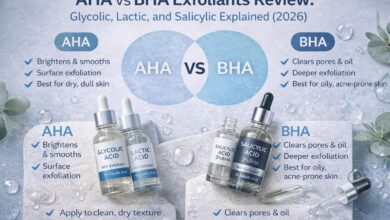
Salicylic acid is a beta-hydroxy acid (BHA) that works as a chemical exfoliant.
Unlike many exfoliants that only work on the surface, BHA is oil-soluble, meaning it can penetrate into pores and dissolve excess oil and debris.
This is why it is commonly used for:
-
blackheads
-
whiteheads
-
oily skin
-
clogged pores
Benefits: What It Can and Can’t Do
What it can help with
✔ reduce blackheads
✔ unclog pores
✔ improve skin texture
✔ reduce breakouts over time
What it cannot do
✖ cure severe cystic acne alone
✖ replace a full skincare routine
✖ work instantly without consistent use
Most people notice improvements after 2–6 weeks of regular use.
Who It’s Best For
Salicylic acid works best for:
-
oily skin
-
combination skin
-
acne-prone skin
-
people dealing with blackheads and clogged pores
If you have dry or sensitive skin, start with a lower percentage and use it less often.
How to Use It (AM/PM + Frequency)
Begin slowly to avoid irritation.
Beginner routine
1–2 nights per week at first.
Application order
Cleanser
→ Salicylic acid
→ Moisturizer
After a few weeks, some people increase to 2–4 nights per week depending on tolerance.
What Not to Mix (Or How to Separate Safely)
If you are new to chemical exfoliants, avoid combining too many strong actives on the same night.
Be careful when combining with:
-
retinoids
-
AHAs
-
strong exfoliating toners
A safer strategy is alternate nights:
Night 1 → BHA
Night 2 → Retinol
Night 3 → Hydration / recovery
Side Effects and Patch Testing
Possible side effects include:
-
dryness
-
peeling
-
mild stinging
-
temporary purging
If irritation becomes severe or persistent, reduce usage or stop.
Because exfoliants increase sensitivity to sunlight, daily sunscreen is recommended.
How to Choose a Product (Buyer Checklist)
When buying a salicylic acid product, look for:
✔ 0.5–2% BHA concentration
✔ fragrance-free formulas if you have sensitive skin
✔ lightweight gel or liquid textures for oily skin
Avoid formulas with high alcohol content if your skin barrier is weak.
Example Popular Product
A widely known BHA exfoliant is:
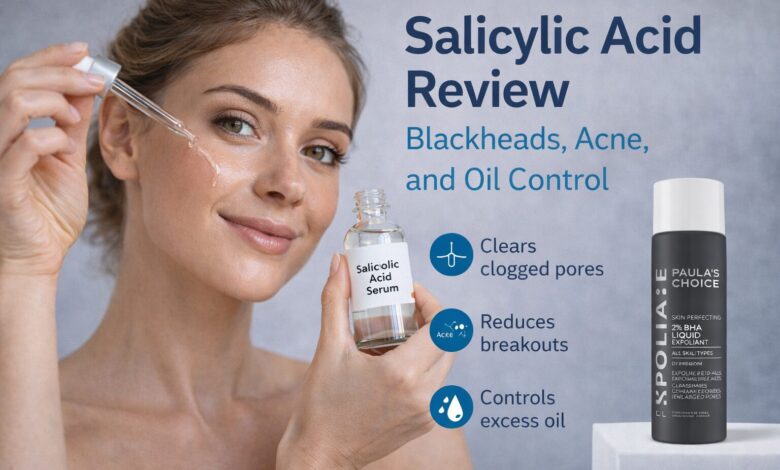
Paula’s Choice Skin Perfecting 2% BHA Liquid Exfoliant
Why many users like it:
-
contains 2% salicylic acid
-
helps unclog pores
-
lightweight liquid texture
-
fragrance-free formula
Many dermatology-focused skincare guides mention it as a common BHA reference product.
Starter Routine Example
Morning
cleanser
→ optional niacinamide
→ moisturizer
→ sunscreen
Evening (BHA Night)
cleanser
→ salicylic acid
→ moisturizer
Recovery Night
cleanser
→ ceramide moisturizer
Internal Links
You can explore these related guides:
Acne routine
Niacinamide review
Retinol review
Hyaluronic acid review
FAQ
What percentage of salicylic acid is best?
Many leave-on products contain 0.5–2%, which is effective while still manageable for most skin types.
Can salicylic acid help blackheads?
Yes. It works inside pores to dissolve oil and debris, which makes it particularly helpful for blackheads.
Can I use salicylic acid every day?
Some people can, but many prefer 2–4 times per week to avoid over-exfoliation.
Can I combine salicylic acid with retinol?
It is usually safer to alternate nights, especially when starting.
Does salicylic acid cause purging?
It can temporarily increase breakouts at the beginning as clogged pores clear.
Sources
American Academy of Dermatology
https://www.aad.org/public/diseases/acne/skin-care/salicylic-acid
Cleveland Clinic
https://my.clevelandclinic.org/health/treatments/22752-salicylic-acid
National Center for Biotechnology Information
https://www.ncbi.nlm.nih.gov/pmc/articles/PMC4554394/
Paula’s Choice
https://www.paulaschoice.com/ingredient-dictionary/exfoliant/salicylic-acid.html