
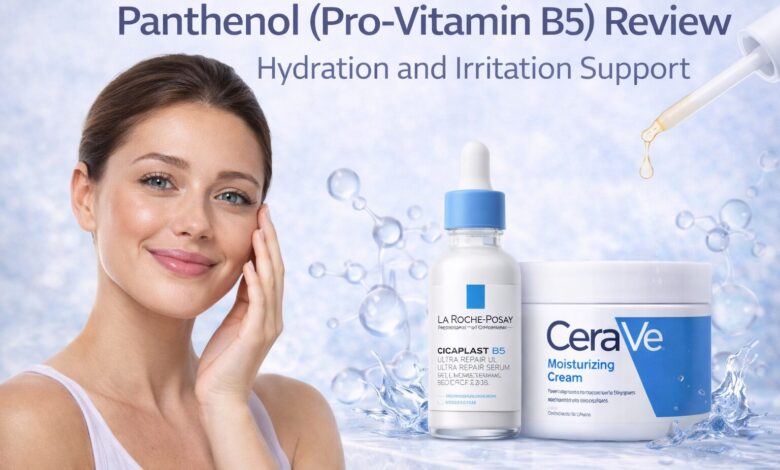
Panthenol, also known as pro-vitamin B5, is one of the most trusted ingredients in skincare for hydration, soothing, and skin-barrier support. It is commonly found in moisturizers, serums, and recovery creams designed for sensitive or irritated skin.
In this review, we’ll explain what panthenol does, its skincare benefits, who should use it, how to apply it in a routine, and what to look for when choosing a panthenol product.
Quick Verdict (Review Summary)
Overall rating: 4.5 / 5
Best for
-
Sensitive skin
-
Irritated or reactive skin
-
Dehydrated skin
-
Skin barrier recovery
Not ideal for
-
People expecting it to treat acne or pigmentation alone
What Is Panthenol?
Panthenol is a form of vitamin B5 used in skincare products. When applied to the skin, it converts into pantothenic acid, which helps support hydration and improve skin comfort.
Panthenol is classified as a humectant, meaning it attracts and holds moisture in the skin. Because of this, it is frequently included in:
-
Sensitive skin moisturizers
-
Barrier-repair creams
-
Soothing serums
-
Post-treatment skincare
Panthenol Benefits: What It Can and Can’t Do
What Panthenol Can Help With
1. Hydration support
Panthenol helps draw moisture into the skin and improve hydration levels.
2. Soothing irritated skin
It’s commonly used to calm redness, dryness, and sensitivity.
3. Skin barrier recovery
Panthenol can help support the skin barrier, especially when skin has been stressed by:
-
Retinoids
-
Exfoliating acids
-
Environmental factors
4. Improved skin comfort
Many people notice that panthenol makes the skin feel softer and less tight.
What Panthenol Cannot Do
Although panthenol is beneficial, it has limits.
It does not:
-
Treat acne on its own
-
Fade dark spots directly
-
Replace active ingredients like retinoids or exfoliating acids
Instead, it works best as a supportive ingredient in a balanced skincare routine.
Who Should Use Panthenol?
Panthenol products are often recommended for people with:
-
Sensitive skin
-
Irritated or inflamed skin
-
Dry or dehydrated skin
-
Skin recovering from retinol or exfoliants
It is also a popular ingredient in routines focused on skin barrier repair.
How to Use Panthenol in a Skincare Routine
Panthenol can usually be used morning and night.
Basic routine
-
Cleanse your skin
-
Apply panthenol serum (optional)
-
Follow with moisturizer
-
Apply sunscreen in the morning
If your product already contains panthenol inside a moisturizer, simply apply it after cleansing.
What Not to Mix (Or How to Layer Safely)
One advantage of panthenol is that it works well with most skincare ingredients.
It pairs well with:
-
Exfoliating acids
Because it helps soothe the skin, it’s often used on recovery nights when skin feels sensitive.
Side Effects and Patch Testing
Panthenol is considered very low-irritation.
If irritation occurs, it’s usually caused by other ingredients in the formula, such as fragrance or essential oils.
To be safe, it’s still recommended to perform a patch test before using a new product.
How to Choose a Good Panthenol Product
When selecting a panthenol moisturizer or serum, look for:
✔ Fragrance-free formulas
✔ Simple ingredient lists
✔ Combination with ceramides or glycerin
Avoid:
✘ Products with heavy fragrance if your skin is sensitive.
Starter Routine Example (Simple)
Morning Routine
Cleanser → Panthenol serum (optional) → Moisturizer → Sunscreen
Evening Routine
Cleanser → Panthenol / Ceramide moisturizer
This type of routine focuses on hydration and barrier support, especially if your skin feels irritated.
FAQ
What does panthenol do for skin?
Panthenol helps support hydration and makes the skin feel soothed, comfortable, and less dry.
Is panthenol good for sensitive skin?
Yes. It is widely used in gentle skincare products designed for sensitive skin.
Can panthenol replace moisturizer?
Not always. Many people use panthenol together with a moisturizer for better hydration and sealing.
Can I use panthenol with retinol?
Yes. Panthenol can help reduce dryness and irritation caused by retinol.
How often can I use panthenol?
Panthenol can usually be used daily, morning and night.
Sources
-
American Academy of Dermatology – Dry Skin Care and Barrier Support
https://www.aad.org -
National Library of Medicine – Panthenol in Dermatology Research
https://pubmed.ncbi.nlm.nih.gov -
Cleveland Clinic – Skin Barrier and Moisturizing Ingredients
https://health.clevelandclinic.org -
Journal of Cosmetic Dermatology – Moisturizing and Barrier-Repair Ingredients
https://onlinelibrary.wiley.com -
Harvard Health Publishing – Skin Care and Moisturizing Science
https://www.health.harvard.edu