
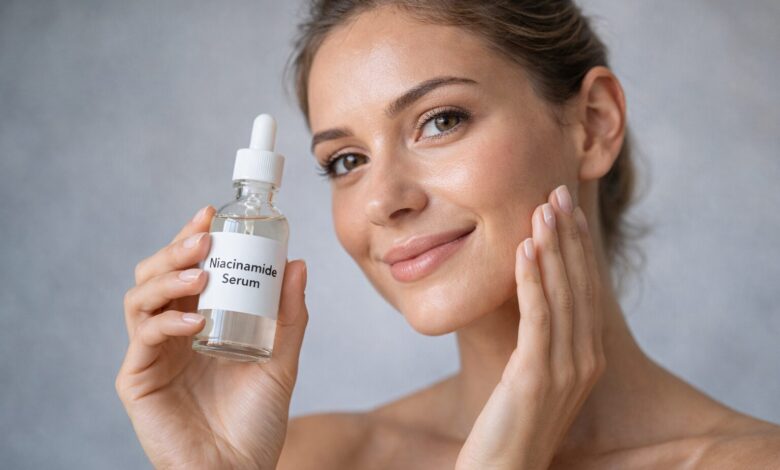
Niacinamide (vitamin B3) is a multi-benefit skincare ingredient known for supporting the skin barrier, balancing oil production, and improving the appearance of uneven tone.
It’s often described as a “workhorse” ingredient because it fits easily into most skincare routines and pairs well with many actives.
Benefits: What It Can and Can’t Do
What It Can Help With
-
Oil balance
-
The appearance of enlarged pores
-
Redness-prone skin
-
Barrier support
-
Overall skin tone clarity
What It Can’t Do
-
Permanently shrink pores
-
Replace sunscreen
-
Deliver instant results overnight
Consistent use over several weeks is key.
Who It’s Best For
✔ Oily or combination skin
✔ Visible pores
✔ Mild redness
✔ Post-acne marks support
✔ Beginners starting active ingredients
If you have sensitive skin, start with a lower percentage and introduce it gradually.
How to Use It (AM/PM + Frequency)
-
Use in the morning or evening
-
Apply after cleansing
-
Follow with moisturizer
-
Use SPF in the morning
Begin once daily for 7 days.
If well tolerated, increase to twice daily.
If using multiple actives (retinol, exfoliating acids), keep niacinamide once daily at first.
What Not to Mix (Or How to Separate Safely)
Niacinamide is generally compatible with:
If flushing occurs:
-
Reduce frequency
-
Lower the percentage
-
Simplify your routine
Avoid stacking too many strong actives in one routine.
Side Effects and Patch Testing
Possible (rare but possible):
-
Mild tingling
-
Temporary flushing
-
Breakouts (often due to high percentages or formula additives)
Always patch test before full-face use.
Choose fragrance-free formulas if reactive.
How to Choose a Product (Buyer Checklist)
Look for:
-
2–5% niacinamide (ideal for most people)
-
Simple ingredient lists
-
Added soothing ingredients (panthenol, allantoin)
Avoid:
-
Extremely high percentages if you’re new
-
Sticky formulas that pill under sunscreen
Higher percentage does NOT always mean better results.
Starter Routine Example
AM
Cleanser → Niacinamide → Moisturizer → SPF
PM
Cleanser → Niacinamide → Moisturizer
(Add retinol on alternate nights if used)
FAQ
What percentage of niacinamide is best?
For most people, 2–5% provides results with better tolerance than very high strengths.
Can niacinamide reduce pores?
It improves the appearance of pores by supporting oil balance and skin texture over time.
Can I use niacinamide with vitamin C?
Yes, most people can. Introduce slowly if sensitive.
Can niacinamide cause breakouts?
Some react to high percentages or complex formulas. Try a lower concentration first.
Should I use niacinamide morning or night?
Either works. Many prefer morning use under sunscreen.
References –
-
National Center for Biotechnology Information – Niacinamide in Dermatology (PubMed Central)
https://www.ncbi.nlm.nih.gov/pmc/articles/PMC4976416/ -
Dermatology Times – Niacinamide Benefits for Skin Barrier and Pores
https://www.dermatologytimes.com/view/niacinamide-benefits-for-skin -
Mayo Clinic – Niacinamide Overview & Uses in Skincare
https://www.mayoclinic.org/retinoids-niacinamide-and-other-products/expert-answers -
American Academy of Dermatology – Choosing and Using Skincare Ingredients
https://www.aad.org/public/everyday-care/skin-care-basics/care