
Overall rating: 4/5
Best for: Dehydrated skin, dryness, makeup-friendly plumping
Not ideal for: People who apply it on dry skin without sealing with moisturizer
What It Is (Plain English)
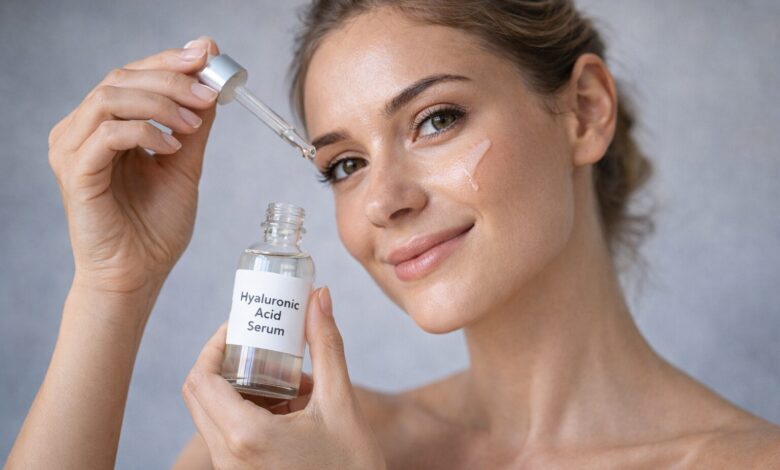
Hyaluronic acid is a humectant—an ingredient that attracts and holds water in the skin.
In skincare, it improves surface hydration and gives a temporary plumping effect. It works best when layered correctly and sealed with a moisturizer.
Benefits: What It Can and Can’t Do
What It Can Help With
-
Surface hydration
-
Temporary plumping
-
Smoother feel under makeup
-
Reducing tightness from strong actives
What It Can’t Do
-
Replace moisturizer completely
-
Permanently change skin structure
-
Treat deep wrinkles alone
Consistency and correct layering are key.
Who It’s Best For
✔ Dry skin
✔ Dehydrated skin
✔ Combination skin needing lightweight hydration
✔ Oily skin (with gel moisturizer)
Most skin types tolerate it well.
How to Use It (AM/PM + Frequency)
-
Cleanse
-
Apply on slightly damp skin
-
Use 1–2 pumps
-
Seal with moisturizer
-
SPF in the morning
Can be used daily, morning and/or night.
What Not to Mix (Or How to Separate Safely)
Hyaluronic acid pairs well with:
-
Exfoliating acids
If you’re using strong actives, HA can reduce dryness by supporting hydration.
Side Effects and Patch Testing
Generally low irritation risk.
Possible issues:
-
Sticky feel
-
Pilling under sunscreen
-
Irritation from fragrance/preservatives
If pilling occurs:
-
Use less product
-
Let it absorb before layering
-
Switch textures
How to Choose a Product (Buyer Checklist)
Look for:
-
HA + glycerin blends
-
Added panthenol or soothing agents
-
Fragrance-free formulas if sensitive
Avoid:
-
Overly thick/sticky formulas
-
Products that pill under sunscreen
Multi-weight hyaluronic acid formulas often feel more balanced.
Starter Routine Example
AM
Cleanser → Hyaluronic acid (damp skin) → Moisturizer → SPF
PM
Cleanser → Hyaluronic acid → Moisturizer
(Add actives on alternate nights if needed)
FAQ
Should I apply hyaluronic acid on wet or dry skin?
Slightly damp skin works best. Always follow with moisturizer.
Can hyaluronic acid dry out my skin?
If used alone without sealing, it may feel tight.
Can oily skin use hyaluronic acid?
Yes. Choose a lightweight formula.
How often can I use it?
Daily, morning and/or night.
What’s better: hyaluronic acid or glycerin?
Both hydrate. Many great formulas combine both.
References –
-
National Center for Biotechnology Information – Hyaluronic Acid: A Key Molecule in Skin Aging
https://www.ncbi.nlm.nih.gov/pmc/articles/PMC3583886/ -
Journal of Clinical and Aesthetic Dermatology – The Role of Hyaluronic Acid in Dermatology
https://www.ncbi.nlm.nih.gov/pmc/articles/PMC3977953/ -
Mayo Clinic – Hyaluronic Acid (Information and Uses)
https://www.mayoclinic.org/drugs-supplements-hyaluronic-acid/art-20363888 -
Dermatology Times – Hyaluronic Acid Serums: Hydration Science & Best Practices
https://www.dermatologytimes.com/view/science-of-hyaluronic-acid-in-skincare