
A high protein diet plan is one of the simplest nutrition strategies for improving satiety, supporting muscle maintenance, and making dieting easier to sustain. Many people struggle with hunger, cravings, and frequent snacking when trying to lose weight. Increasing protein intake can help address these challenges because protein tends to keep you full longer than carbohydrates or fats.
Instead of complicated calorie tracking or strict food rules, a high-protein approach focuses on building meals around reliable protein sources such as eggs, yogurt, poultry, fish, legumes, and lean meats. When protein is consistent at each meal, it becomes easier to control hunger and maintain balanced energy levels throughout the day.
This guide explains what a high-protein diet plan is, who it may benefit, how to build meals, common mistakes to avoid, and a simple daily routine you can follow.
What Is High Protein Diet Plan?
A high-protein diet plan emphasizes increasing protein intake while maintaining balanced meals that include vegetables, fiber, and moderate carbohydrates.
Protein is an essential macronutrient responsible for:
-
supporting muscle repair and maintenance
-
helping regulate appetite
-
contributing to overall metabolic health
While individual needs vary, many high-protein plans aim for approximately 20–30 grams of protein per meal or around 1.2–1.6 grams of protein per kilogram of body weight per day for people focusing on weight management or fitness goals.
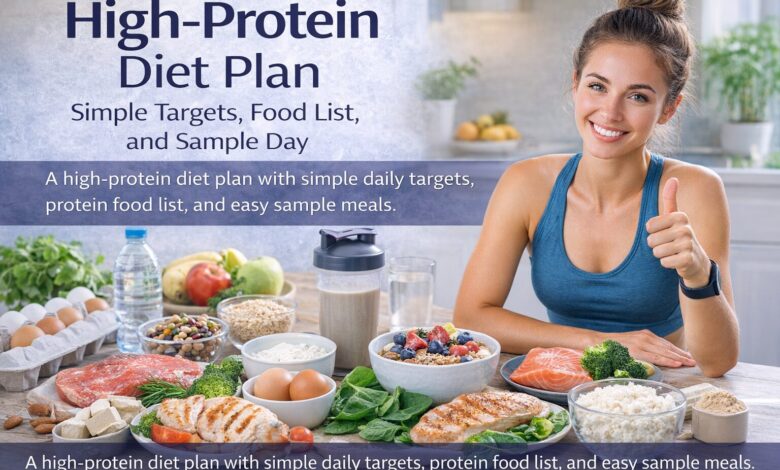
Common high-protein foods include:
-
eggs
-
Greek yogurt
-
chicken and turkey
-
fish and seafood
-
lean beef
-
tofu and tempeh
-
beans and lentils
-
cottage cheese
The goal is not to eliminate other nutrients but to prioritize protein as the foundation of meals.
Benefits of High Protein Diet Plan
A high-protein diet can offer several practical benefits for people trying to improve their eating habits.
Improved satiety
Protein helps you feel full longer, which may reduce unnecessary snacking.
Better weight-management support
Higher protein intake can make calorie control easier by reducing hunger.
Muscle maintenance
Adequate protein helps preserve muscle mass during weight loss.
Stable energy levels
Balanced meals with protein and fiber can help prevent rapid blood-sugar fluctuations.
Simpler meal structure
When protein becomes the starting point of a meal, building balanced dishes becomes easier.
Who Should Use It
A high-protein diet plan may work well for people who:
-
often feel hungry between meals
-
struggle with late-night snacking
-
want to support weight loss while maintaining muscle
-
prefer simple meal structures instead of strict dieting
It may also benefit beginners who want a clear and practical eating strategy without tracking every calorie.
However, individuals with certain medical conditions—such as kidney disease—should consult a healthcare professional before significantly increasing protein intake.
How to Use High Protein Diet Plan
Starting a high-protein diet plan can be simple if you follow a few practical steps.
1. Include protein at every meal
Aim to include a solid protein source at breakfast, lunch, and dinner.
Examples:
-
eggs or yogurt at breakfast
-
chicken, tuna, or tofu at lunch
-
fish, beef, or legumes at dinner
2. Build a protein food list
Keeping a list of protein-rich foods helps simplify meal planning.
Examples include:
-
eggs
-
Greek yogurt
-
chicken breast
-
turkey
-
fish (salmon, tuna, sardines)
-
lean beef
-
tofu and tempeh
-
beans and lentils
3. Structure meals around protein
A simple structure:
-
Protein source
-
Vegetables or fruit
-
Moderate carbohydrates (rice, potatoes, whole grains)
-
Healthy fats
4. Add fiber to improve fullness
Protein works best when paired with fiber.
Include foods like:
-
vegetables
-
fruit
-
legumes
-
whole grains
5. Choose protein-based snacks if needed
If snacks are necessary, choose options that support satiety.
Examples:
-
Greek yogurt
-
cottage cheese
-
tuna
-
boiled eggs
-
a protein shake
Side Effects
A high-protein diet is generally safe for healthy individuals, but some people may experience minor adjustments when increasing protein intake.
Possible side effects include:
-
digestive discomfort if protein increases too quickly
-
constipation if fiber intake is low
-
dehydration if water intake is insufficient
These issues are usually avoided by drinking enough water and maintaining adequate fiber intake.
Common Mistakes
Some people misapply high-protein diets and reduce their effectiveness.
Relying only on protein shakes
Whole foods should remain the foundation of your diet.
Ignoring fiber and vegetables
Protein without fiber can reduce digestive comfort.
Choosing sugary “protein” snacks
Many processed protein bars contain excess sugar and calories.
Drastically reducing carbohydrates
Balanced meals often work better than extreme restrictions.
Routine Example
Here is a simple sample day for a high-protein diet plan.
Breakfast
Greek yogurt with berries and nuts
Lunch
Chicken salad bowl with vegetables and olive oil
Snack
Cottage cheese or a boiled egg
Dinner
Grilled fish with roasted vegetables and brown rice
Optional snack
A small protein smoothie or yogurt
This structure provides consistent protein intake across the day while maintaining balanced nutrition.
FAQ
Is a high-protein diet safe?
For many people it is safe, but those with kidney disease or specific medical conditions should consult a healthcare professional.
Will high protein help with weight loss?
It can help increase fullness and reduce cravings, which may support better adherence to a calorie-controlled diet.
Do I need protein powder?
No. Protein powder is optional and mainly used for convenience.
Can I follow a high-protein diet on a budget?
Yes. Eggs, beans, lentils, canned fish, and yogurt are affordable protein sources.
Can high protein cause constipation?
It can happen if fiber and water intake are low. Increasing both usually resolves the issue.
Conclusion
A high protein diet plan is a practical and flexible way to improve meal satisfaction, reduce cravings, and support balanced nutrition. By focusing on protein-rich foods at every meal and pairing them with vegetables, fiber, and moderate carbohydrates, many people find it easier to maintain healthy eating habits.
Start by choosing a few protein sources you enjoy, build simple meals around them, and aim for consistency rather than perfection. Over time, this approach can make dieting more sustainable and easier to maintain.
References
-
Leidy HJ, Clifton PM, Astrup A, et al.
The Role of Protein in Weight Loss and Maintenance.
American Journal of Clinical Nutrition.
https://doi.org/10.3945/ajcn.114.084038 -
Paddon-Jones D, Leidy H.
Dietary Protein and Muscle in Weight Management.
Current Opinion in Clinical Nutrition & Metabolic Care.
https://doi.org/10.1097/MCO.0b013e3282c3c5a8 -
Phillips SM.
A Brief Review of Higher Dietary Protein Diets in Weight Loss.
Applied Physiology, Nutrition, and Metabolism.
https://doi.org/10.1139/H07-045 -
Harvard T.H. Chan School of Public Health
Protein: The Nutrition Source
https://www.hsph.harvard.edu/nutritionsource/what-should-you-eat/protein/