
Overall rating: ⭐⭐⭐⭐☆ (4/5)
Best for: Skin texture, dullness, clogged pores
Not ideal for: Overuse, damaged skin barriers, stacking too many active ingredients
What Are AHA and BHA Exfoliants?
Chemical exfoliants help remove dead skin cells and improve overall skin texture.
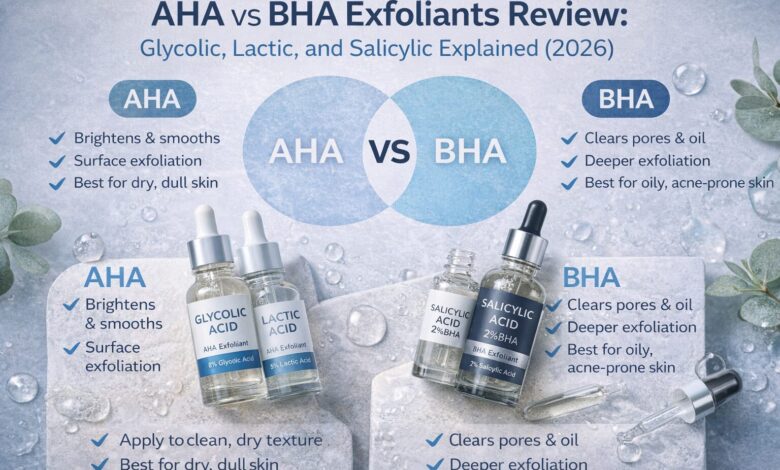
AHAs (Alpha-Hydroxy Acids) work mainly on the surface of the skin to improve brightness and smoothness.
BHAs (Beta-Hydroxy Acids) like salicylic acid penetrate deeper into pores and help remove excess oil and buildup.
Choosing the right exfoliant depends more on your skin type and concern than on strength.
Key Benefits of AHA vs BHA
AHA Benefits
-
Improves skin texture
-
Brightens dull skin
-
Helps with mild discoloration
-
Smooths rough patches
BHA Benefits
-
Clears clogged pores
-
Helps reduce blackheads
-
Controls excess oil
-
Suitable for acne-prone skin
Limitations
Chemical exfoliants cannot replace treatments like retinoids for long-term collagen stimulation or cure severe acne on their own.
Which Skin Type Should Use Each?
AHA (Glycolic or Lactic Acid)
Best for:
-
Dry skin
-
Dull skin
-
Uneven skin texture
-
Mild pigmentation
BHA (Salicylic Acid)
Best for:
-
Oily skin
-
Acne-prone skin
-
Blackheads
-
Congested pores
Sensitive Skin
Start with lactic acid or low-strength formulas to reduce irritation risk.
How Often Should You Exfoliate?
Start slowly to avoid damaging your skin barrier.
Recommended beginner routine:
Week 1–2:
Use exfoliant once per week
Week 3+:
Increase to twice per week if your skin tolerates it well.
Application tips:
-
Apply to clean, dry skin
-
Follow with moisturizer
-
Always wear sunscreen the next day
Ingredients You Should Avoid Mixing
When using exfoliating acids, avoid combining too many strong actives in one routine.
Avoid using together at first:
-
Retinol + AHA/BHA
-
Strong vitamin C + acids
-
Multiple exfoliating acids
A safer routine:
Morning
Cleanser → Moisturizer → SPF
Evening (exfoliation night)
Cleanser → AHA/BHA → Moisturizer
Recovery nights
Cleanser → Barrier moisturizer (ceramides)
Signs of Over-Exfoliation
Using acids too frequently may damage your skin barrier.
Watch for these symptoms:
-
Burning sensation
-
Redness
-
Tight skin
-
Flaking
-
Increased breakouts
If this happens, stop exfoliating temporarily and focus on moisturizing and barrier repair.
How to Choose the Right Exfoliant
Use this quick checklist before buying:
✔ Choose BHA if you struggle with clogged pores or acne
✔ Choose lactic acid if your skin is sensitive
✔ Choose glycolic acid for stronger surface exfoliation
✔ Look for fragrance-free formulas
✔ Avoid very high-strength peels unless professionally guided
Simple Starter Skincare Routine
Morning
-
Gentle cleanser
-
Moisturizer
-
Sunscreen (SPF)
Evening (Exfoliation Night)
-
Cleanser
-
AHA or BHA exfoliant
-
Moisturizer
Evening (Recovery Night)
-
Cleanser
-
Ceramide moisturizer
Frequently Asked Questions
Which is better for acne: AHA or BHA?
BHA (salicylic acid) is usually better for acne because it penetrates oily pores and helps clear blockages.
How often should I exfoliate?
Most people benefit from 1–2 times per week, depending on skin sensitivity.
Is glycolic acid too strong for sensitive skin?
It can be. Lactic acid is usually a gentler starting option.
Can I use AHA and BHA together?
Some products combine them, but beginners should start with one to reduce irritation risk.
How do I know if I over-exfoliated?
Common signs include redness, burning, tightness, peeling, and increased breakouts.
Related Articles
-
Ceramides Guide →
Sources
American Academy of Dermatology – Salicylic Acid for Acne
Healthline – AHA vs BHA: What’s the Difference?
Paula’s Choice – AHA vs BHA Exfoliants Guide