
Important Note
This article is for educational purposes and does not replace medical advice. If you have a medical condition, take medication, are pregnant/breastfeeding, or have a history of eating disorders, consult a qualified clinician before making major diet changes.
Quick Summary
Fiber helps you feel full on fewer calories. This guide shows a simple food-first way to increase fiber safely and consistently.
Who This Is For
People who snack often, feel hungry on diets, or want better digestion and satiety.
The Core Idea
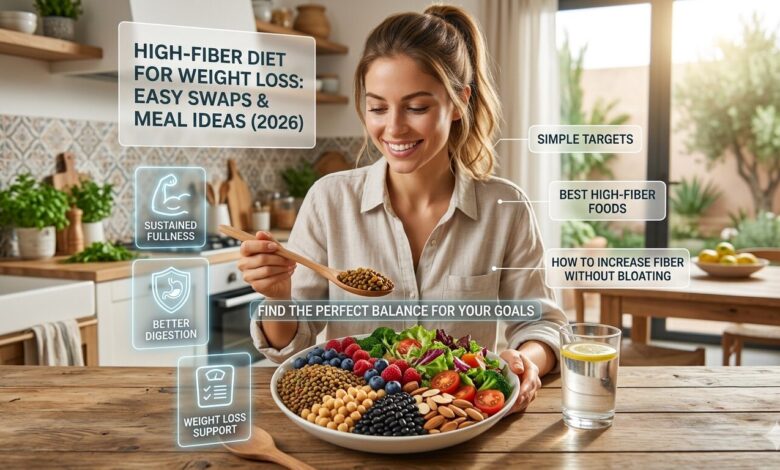
Most people increase fiber too fast and get bloated. The secret is gradual changes and enough water.
Step-by-Step Plan
Step 1: Add one fiber food per meal
Incorporate at least one high-fiber ingredient such as vegetables, beans, oats, or berries into every meal. Small, consistent additions are easier for the digestive system to handle than large, irregular amounts.
Step 2: Start meals with volume
Begin your lunch or dinner with a high-volume, low-calorie starter like a fresh salad or a vegetable-based soup. This strategy helps trigger fullness signals before you consume the more calorie-dense portions of your meal.
Step 3: Upgrade carbs
Swap refined carbohydrates for whole-food alternatives. Choose whole grains, lentils, or chickpeas instead of white bread, white rice, or processed pasta to significantly boost your daily fiber count.
Step 4: Increase slowly
Avoid digestive discomfort by spreading your fiber increase over a period of 2 to 4 weeks. This gradual transition allows your gut bacteria to adjust to the new dietary pattern.
Step 5: Use supplements only if needed
Focus on obtaining fiber from whole food sources first, as they provide essential micronutrients. If you struggle to meet your daily targets, supplements can be used as a secondary support tool.
Common Mistakes
- Jumping from a low-fiber diet to a very high-fiber intake overnight.
- Increasing fiber consumption without a corresponding increase in water intake.
- Relying heavily on fiber supplements while continuing to eat ultra-processed meals.
- Ignoring your body’s personal tolerance levels and gastrointestinal symptoms.
Safety and When to Get Help
If you live with IBS, inflammatory bowel disease, or take specific medications that require precise absorption rates, it is vital to consult a clinician before making significant changes to your fiber intake or starting supplements.
Internal Links
Recommended Actions
- Commit to adding one cup of vegetables to both lunch and dinner for the next 14 days.
- Try incorporating beans or lentils into your cooking at least twice this week.
- If you experience bloating, simply slow down the rate of fiber increase and monitor your hydration.
FAQ
Does fiber help with weight loss?
Yes, fiber improves satiety and reduces the urge to snack, which makes maintaining a calorie deficit more manageable.
What are the best high-fiber foods?
Excellent options include beans, lentils, oats, berries, various vegetables, and whole grains.
How do I avoid bloating?
The most effective way to prevent bloating is to increase your fiber intake very gradually and drink plenty of water throughout the day.
Is soluble or insoluble fiber better?
Both are necessary for optimal health. Soluble fiber helps with fullness and metabolic health, while insoluble fiber adds bulk and supports regular bowel movements.
Should I take fiber supplements?
A food-first approach is recommended. Supplements should only be considered if you are unable to meet your fiber requirements through a balanced diet of whole foods.
Sources
- Mayo Clinic: Fiber for a Healthy Diet
- Healthline: High-Fiber Foods for Weight Loss
- WebMD: How Fiber Helps You Lose Weight
- Medical News Today: Benefits of a High-Fiber Diet