
The intermittent fasting diet has become one of the most popular nutrition strategies for weight management and improving eating habits. Instead of focusing only on what you eat, intermittent fasting focuses on when you eat.
For many people, fasting simplifies eating patterns, reduces late-night snacking, and helps create a natural calorie deficit. However, fasting can also backfire when it leads to overeating, low energy, or poor sleep.
The key to success is understanding that fasting is simply a meal timing tool. The quality and structure of the meals during the eating window determine whether the strategy supports long-term health and sustainable weight loss.
This guide explains how intermittent fasting works, the most common fasting schedules, and how to structure meals to avoid hunger spikes and binge eating.
Table of Contents
-
What Is an Intermittent Fasting Diet
-
Benefits of Intermittent Fasting
-
Who Should Use It
-
How to Follow an Intermittent Fasting Diet
-
Side Effects
-
Common Mistakes
-
Routine Example
-
FAQ
What Is an Intermittent Fasting Diet
An intermittent fasting diet is an eating pattern that alternates between periods of eating and fasting.
Unlike traditional diets, fasting focuses primarily on meal timing rather than food restriction.
Popular fasting schedules include:
12/12 fasting
12 hours fasting and 12 hours eating.
14/10 fasting
14 hours fasting and a 10-hour eating window.
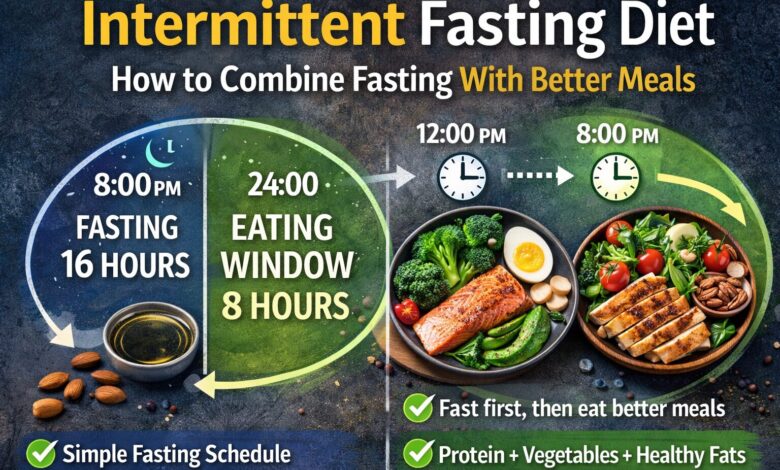
16/8 fasting
The most common method, where people fast for 16 hours and eat during an 8-hour window.
Many beginners start with shorter fasting periods and gradually increase them as their body adapts.
Benefits of Intermittent Fasting
Many people find intermittent fasting helpful because it simplifies their eating routine.
Possible benefits include:
-
reduced mindless snacking
-
improved meal structure
-
easier calorie control
-
better awareness of hunger signals
Some individuals also report improved focus and energy during fasting periods.
However, these benefits depend largely on meal quality and consistency during the eating window.
Who Should Use It
Intermittent fasting may work well for:
-
people who prefer fewer meals per day
-
individuals who snack frequently at night
-
people who enjoy structured eating windows
-
those who want a simpler meal schedule
However, it is not necessary for weight loss, and some people do better with regular meal timing.
How to Follow an Intermittent Fasting Diet
Start With a Gentle Schedule
Beginners should avoid aggressive fasting schedules.
Start with:
-
12-hour overnight fasting
-
then move to 14 hours
-
and eventually try 16/8 if comfortable
Gradual adaptation helps prevent excessive hunger.
Break the Fast With a Balanced Meal
Your first meal should include:
-
fiber-rich foods
-
healthy fats
Avoid breaking the fast with high-sugar foods, which can cause hunger spikes.
Focus on Two Balanced Meals
Many people succeed with two strong meals per day instead of multiple small meals.
Each meal should include:
-
protein
-
vegetables or fruit
-
healthy fats
-
optional carbohydrate sources depending on goals
Protect Your Sleep
Poor sleep can make fasting more difficult.
Helpful habits include:
-
avoiding late caffeine
-
finishing large meals several hours before sleep
-
maintaining a consistent sleep schedule
Intermittent Fasting Diet Side Effects
Some people may experience temporary side effects when starting intermittent fasting.
Possible symptoms include:
-
hunger during the first weeks
-
headaches
-
fatigue
-
irritability
These effects often improve as the body adapts to the new eating schedule.
Common Mistakes
Using fasting as permission for unhealthy meals
Eating highly processed foods during the eating window may reduce the benefits of fasting.
Skipping meals and overeating later
Extremely long fasting periods can lead to large evening meals.
Using caffeine excessively
Some people rely on stimulants to suppress hunger during fasting.
Choosing a fasting schedule that harms sleep
Late-night eating windows can disrupt sleep quality.
Routine Example
Example 16/8 intermittent fasting schedule:
Morning
Water, tea, or black coffee
First Meal (12:00 PM)
Grilled chicken salad with vegetables and olive oil
Snack (Optional)
Greek yogurt with berries
Dinner (7:00 PM)
Salmon, roasted vegetables, and quinoa
Fasting begins again at 8:00 PM
FAQ
Does intermittent fasting work for weight loss?
Yes. Intermittent fasting can support weight loss if it helps maintain a consistent calorie deficit.
Is 16/8 better than other fasting schedules?
Not necessarily. The best schedule is the one you can maintain comfortably.
Can I drink coffee while fasting?
Many people drink black coffee while fasting, but excessive caffeine may affect sleep or hunger.
Why do I overeat after fasting?
This may happen if fasting periods are too long or if meals lack protein and fiber.
Who should avoid intermittent fasting?
People who are pregnant, breastfeeding, underweight, or have a history of eating disorders should consult a healthcare professional before trying fasting.
Conclusion
The intermittent fasting diet can be an effective strategy for simplifying meal timing and reducing unnecessary snacking. However, fasting alone does not guarantee results.
Success depends on balanced meals, a sustainable schedule, and habits that support long-term health. For many people, a moderate fasting routine combined with nutritious meals provides the best results.
References
-
Patterson, R. E., & Sears, D. D. (2017).
Metabolic effects of intermittent fasting.
Annual Review of Nutrition.
https://doi.org/10.1146/annurev-nutr-071816-064634 -
Anton, S. D., Moehl, K., Donahoo, W. T., et al. (2018).
Flipping the metabolic switch: Understanding and applying the health benefits of fasting.
Obesity Journal.
https://doi.org/10.1002/oby.22065 -
de Cabo, R., & Mattson, M. P. (2019).
Effects of intermittent fasting on health, aging, and disease.
New England Journal of Medicine.
https://doi.org/10.1056/NEJMra1905136 -
Varady, K. A. (2022).
Intermittent fasting and weight loss: Evidence and clinical implications.
Nature Reviews Endocrinology.
https://doi.org/10.1038/s41574-022-00638-0