
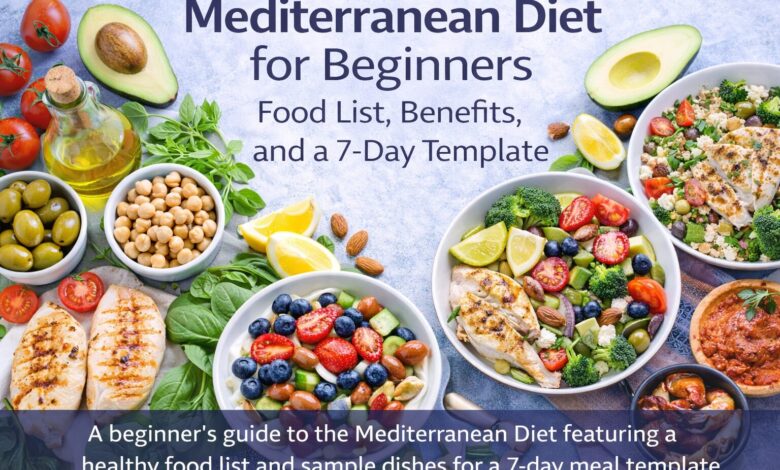
The Mediterranean diet for beginners is one of the most practical and sustainable ways to improve eating habits without strict rules or extreme restrictions. Instead of focusing on eliminating foods, this approach emphasizes whole, minimally processed ingredients such as vegetables, fruits, legumes, whole grains, fish, and healthy fats like olive oil.
Originally inspired by traditional eating patterns in countries around the Mediterranean Sea, this diet pattern supports long-term health while remaining flexible and enjoyable. Many people choose it not only for general wellness but also for improving energy levels, supporting heart health, and maintaining a balanced weight.
In this guide, you will learn what the Mediterranean diet is, its main benefits, who should follow it, how to start, and a simple 7-day meal template that beginners can repeat easily.
What Is Mediterranean Diet for Beginners?
The Mediterranean diet is a balanced eating pattern that focuses on whole foods rather than strict calorie counting or eliminating entire food groups. The goal is to build meals around plants, healthy fats, and quality protein sources.
The foundation of this diet includes:
-
Vegetables and fruits
-
Whole grains (oats, brown rice, whole-grain bread)
-
Legumes such as lentils, beans, and chickpeas
-
Healthy fats like olive oil and nuts
-
Fish and seafood several times per week
-
Moderate poultry, eggs, and dairy
-
Limited ultra-processed foods and added sugars
Instead of a rigid meal plan, the Mediterranean diet works as a flexible food pattern that can easily adapt to different lifestyles and cultural preferences.
Benefits of Mediterranean Diet for Beginners
One of the reasons the Mediterranean diet is widely recommended is because it balances nutrition, sustainability, and enjoyment.
Common benefits include:
Better overall nutrition
Meals emphasize vegetables, fiber, and healthy fats, which support a balanced diet.
Heart health support
Olive oil, fish, and nuts provide beneficial fats that support cardiovascular health.
Sustainable weight management
Many people find it easier to maintain a healthy weight because the diet encourages satisfying whole foods.
Improved meal consistency
The structure of regular meals built around simple ingredients helps maintain stable eating habits.
Long-term lifestyle compatibility
Unlike restrictive diets, the Mediterranean diet can be maintained for years.
Who Should Use It
The Mediterranean diet for beginners is suitable for many people, particularly those who want a balanced and non-extreme approach to eating.
It may be helpful for:
-
Beginners starting a healthier diet
-
People looking for a sustainable weight-loss approach
-
Individuals who prefer flexible meal planning
-
Those who want a diet rich in whole foods
However, people with medical conditions, food allergies, or specific dietary requirements should consider consulting a healthcare professional before making major dietary changes.
How to Use Mediterranean Diet for Beginners
Starting the Mediterranean diet does not require complicated rules. Instead, focus on building balanced meals.
Use the Mediterranean plate method
A simple structure for most meals:
-
Half the plate: vegetables
-
One quarter: protein (fish, chicken, beans, eggs)
-
One quarter: whole grains or starch
-
Healthy fat: olive oil or nuts
Build a weekly structure
A typical week may include:
-
2–3 fish meals
-
2 meals with legumes
-
2 poultry meals
-
1–2 optional red meat meals
Keep breakfast simple
Common Mediterranean-style breakfasts include:
-
Greek yogurt with fruit and nuts
-
Eggs with vegetables
-
Oatmeal with berries
Snack wisely
Balanced snack options include:
-
Fresh fruit
-
Nuts
-
Yogurt
-
Hummus with vegetables
Side Effects
The Mediterranean diet is generally considered safe for most people. However, beginners may experience a few adjustments.
Possible issues include:
-
Eating too many calorie-dense foods like nuts or olive oil
-
Digestive adjustment when increasing fiber intake
-
Difficulty planning meals initially
Most of these challenges improve as eating habits become more consistent.
Common Mistakes
Some beginners misunderstand the Mediterranean diet and unintentionally make it less effective.
Common mistakes include:
Using unlimited olive oil and nuts
Although healthy, they are calorie-dense and should be used in reasonable portions.
Turning the diet into strict perfection
The Mediterranean approach works best when it remains flexible.
Not planning simple meals
Without basic planning, people may revert to ultra-processed foods.
Ignoring protein intake
Balanced meals should include adequate protein sources.
Routine Example
Here is a simple 7-day Mediterranean diet template beginners can repeat weekly.
Day 1
Breakfast: Greek yogurt, berries, nuts
Lunch: Chickpea salad with vegetables
Dinner: Grilled fish, vegetables, olive oil
Day 2
Breakfast: Oatmeal with fruit
Lunch: Whole-grain sandwich with tuna
Dinner: Lentil stew with vegetables
Day 3
Breakfast: Eggs with tomatoes and spinach
Lunch: Quinoa salad with vegetables
Dinner: Baked chicken, roasted vegetables
Day 4
Breakfast: Yogurt and fruit
Lunch: Hummus with whole-grain bread and salad
Dinner: Grilled fish with brown rice
Day 5
Breakfast: Oats with berries
Lunch: Lentil salad
Dinner: Chicken with vegetables and olive oil
Day 6
Breakfast: Eggs and vegetables
Lunch: Mediterranean grain bowl
Dinner: Fish with roasted vegetables
Day 7
Breakfast: Yogurt, nuts, fruit
Lunch: Chickpea and vegetable bowl
Dinner: Simple vegetable pasta with olive oil
FAQ
Can the Mediterranean diet help with weight loss?
Yes. When portions are balanced and ultra-processed foods are limited, it can support sustainable weight management.
What foods are the foundation of the Mediterranean diet?
Vegetables, fruits, legumes, whole grains, olive oil, fish, and minimally processed foods.
Do I need to avoid carbs on the Mediterranean diet?
No. Whole-grain carbohydrates are part of the diet when eaten in balanced portions.
Is the Mediterranean diet expensive?
Not necessarily. Beans, lentils, frozen vegetables, and canned fish can make it budget-friendly.
How long before results appear?
Many people notice improved energy and better eating consistency within a few weeks. Weight changes depend on adherence and portion control.
Conclusion
The Mediterranean diet for beginners offers a practical and sustainable way to improve eating habits without strict rules. By focusing on vegetables, whole foods, healthy fats, and balanced meals, it supports long-term health while remaining flexible and enjoyable.
Instead of aiming for perfection, start with a few repeatable meals, keep ingredients simple, and gradually build a routine you can maintain for the long term.
References
-
Willett WC, et al.
Mediterranean Diet Pyramid: A Cultural Model for Healthy Eating.
American Journal of Clinical Nutrition.
https://doi.org/10.1093/ajcn/61.6.1402S -
Estruch R, et al.
Primary Prevention of Cardiovascular Disease with a Mediterranean Diet.
New England Journal of Medicine.
https://www.nejm.org/doi/full/10.1056/NEJMoa1800389 -
Sofi F, et al.
Adherence to Mediterranean Diet and Health Status: Meta-Analysis.
BMJ.
https://www.bmj.com/content/337/bmj.a1344 -
Harvard T.H. Chan School of Public Health
Mediterranean Diet Overview
https://www.hsph.harvard.edu/nutritionsource/healthy-weight/diet-reviews/mediterranean-diet/