
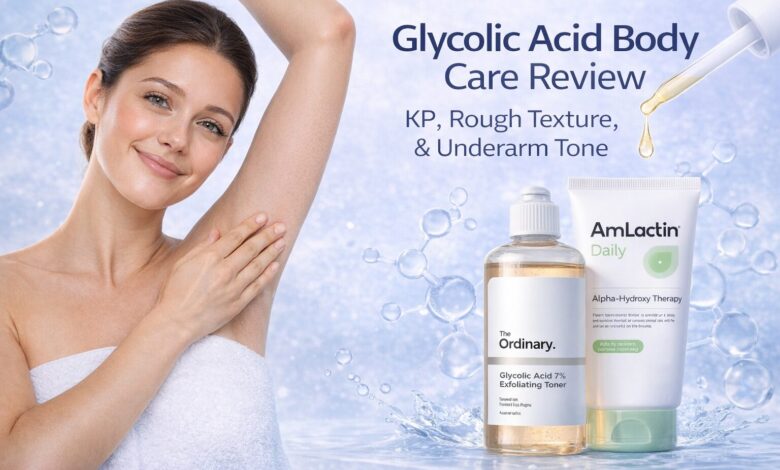
Quick Verdict (Review Summary)
Overall rating: ⭐⭐⭐⭐☆ (4/5)
Best for
-
Rough body texture
-
Keratosis Pilaris (KP) bumps
-
Smoother skin feel on arms and thighs
Not ideal for
-
Very sensitive skin
-
Freshly shaved or irritated areas
What Is Glycolic Acid? (Plain English)
Glycolic acid is an alpha hydroxy acid (AHA) used in skincare for chemical exfoliation. It works by loosening dead skin cells on the surface, allowing them to shed more easily.
In body care products such as lotions, toners, or serums, glycolic acid helps improve:
-
rough texture
-
dull skin
-
small bumps like keratosis pilaris
Because glycolic acid has a small molecular size, it penetrates skin effectively, making it one of the most widely used AHAs.
Benefits: What Glycolic Acid Can and Can’t Do
What It Can Help With
Smoother body texture
Regular use can make skin feel smoother by removing buildup of dead skin cells.
Reducing rough bumps
People with keratosis pilaris (KP) often notice improvement with consistent exfoliation.
More even-looking skin tone
Exfoliation can gradually improve the appearance of dull or uneven skin.
What It Cannot Do
Even though glycolic acid is effective, it cannot:
-
eliminate KP instantly
-
permanently change skin type
-
replace moisturizer or sunscreen
Consistency and proper hydration are essential.
Who Glycolic Acid Body Care Is Best For
This ingredient is most helpful for people who experience:
-
keratosis pilaris (KP) on arms or thighs
-
rough body texture
-
dull-looking body skin
Some people also use glycolic acid for underarm tone or odor control, although that area is more sensitive and may react more easily.
How to Use Glycolic Acid on the Body
When starting glycolic acid body care, it’s important to introduce it slowly.
Beginner frequency
Start with:
1–2 nights per week
Then increase only if your skin tolerates it well.
Basic routine
-
Shower with a gentle body cleanser
-
Apply a thin layer of glycolic acid product on dry skin
-
Follow with a rich moisturizer
Important tips
-
Avoid applying right after shaving
-
Wait at least 24 hours after hair removal
-
Avoid broken or irritated skin
What Not to Mix (Or How to Use Safely)
To reduce irritation, avoid using glycolic acid with multiple strong exfoliants on the same night.
For example, avoid combining with:
If you use retinoids on the body, alternate nights rather than applying both together.
Also remember that AHAs increase sun sensitivity, so exposed skin should be protected with sunscreen.
Possible Side Effects and Patch Testing
Some people may experience:
-
mild stinging
-
dryness
-
redness
These reactions are more common in sensitive areas like underarms or after shaving.
Before full use, perform a patch test on a small area such as the inner arm.
How to Choose a Good Glycolic Body Product
When buying glycolic acid body care, look for:
✔ A clear mention of AHA or glycolic acid
✔ Added moisturizers such as glycerin or ceramides
✔ Fragrance-free formulas if you have sensitive skin
Avoid very high-strength peels if you are new to chemical exfoliation.
Simple Starter Routine
Shower Routine
Step 1: Gentle body cleanser
Step 2: Glycolic acid body product (1–2 nights per week)
Step 3: Moisturizing body lotion
On Non-Exfoliation Nights
Cleanse → moisturize only
Keeping the skin hydrated helps maintain barrier health and reduces irritation.
FAQ
Does glycolic acid help keratosis pilaris?
Yes. Consistent use can improve the appearance and feel of rough KP bumps over time.
How often should I use glycolic acid on my body?
Most people start with 1–2 times per week and increase only if their skin remains comfortable.
Can glycolic acid be used on underarms?
Some people use it for tone or odor control, but irritation is common, especially after shaving.
Should I moisturize after glycolic acid?
Yes. Applying moisturizer helps reduce dryness and support the skin barrier.
Can glycolic acid increase sun sensitivity?
Yes. AHAs can make skin more sensitive to sunlight, so protect exposed areas with sunscreen.
Sources
-
American Academy of Dermatology – Chemical Exfoliation and AHAs
https://www.aad.org -
National Library of Medicine – Glycolic Acid Dermatology Studies
https://pubmed.ncbi.nlm.nih.gov -
Cleveland Clinic – Keratosis Pilaris and Treatment Options
https://health.clevelandclinic.org -
Journal of Cosmetic Dermatology – AHA Skin Exfoliation Research
https://onlinelibrary.wiley.com