
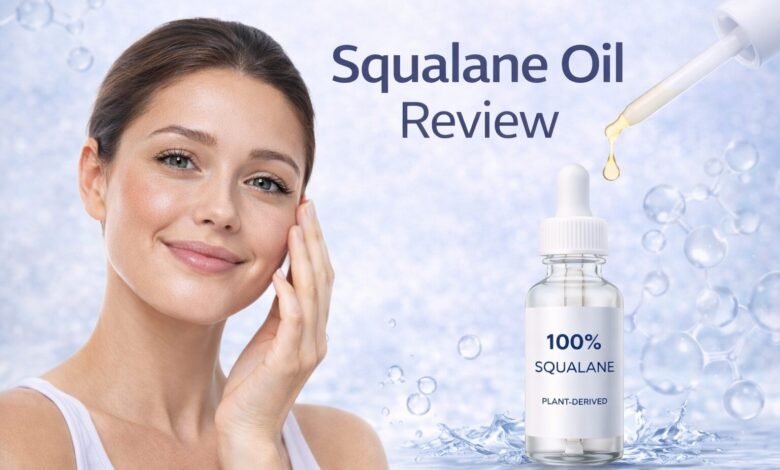
Squalane oil has become one of the most popular facial oils in modern skincare routines. Unlike many heavier oils, squalane is known for its lightweight texture and strong moisturizing ability.
Many dermatologists and skincare experts recommend it for dry, dehydrated, or sensitive skin, and even some people with oily skin find it comfortable to use.
In this review, we’ll explain what squalane is, its skincare benefits, who should use it, how to apply it without clogging pores, and how to choose a quality product.
Quick Verdict (Review Summary)
Overall rating: 4 / 5
Best for
-
Dry skin
-
Dehydrated skin
-
Skin barrier support
-
Lightweight facial oil step
Not ideal for
-
People who dislike the feeling of facial oils
What Is Squalane? (Plain English)
Squalane is a stable, lightweight emollient oil used in skincare to help lock moisture into the skin.
It is a hydrogenated form of squalene, a natural lipid found in human skin. Because pure squalene oxidizes quickly, skincare products use squalane, which is more stable and longer-lasting.
Today, most cosmetic squalane is derived from:
-
Sugarcane
-
Olives
Both sources can work well in skincare products.
Squalane Benefits: What It Can and Can’t Do
What Squalane Can Help With
1. Moisture retention
Squalane helps prevent transepidermal water loss, allowing the skin to stay hydrated longer.
2. Softening dry patches
It smooths rough or flaky areas and improves overall skin texture.
3. Skin barrier support
Because it mimics natural skin lipids, squalane can help maintain skin barrier comfort.
4. Lightweight oil hydration
Unlike heavier oils, squalane usually feels light and fast-absorbing.
What Squalane Cannot Do
Although it’s a great moisturizer, squalane cannot:
-
Replace sunscreen
-
Treat acne directly
-
Remove dark spots or hyperpigmentation
It works best as a hydration-support step in a balanced routine.
Who Should Use Squalane Oil?
Squalane can work well for many skin types, including:
-
Dry skin
-
Dehydrated skin
-
Sensitive skin
-
People with tight or uncomfortable skin
Some oily-skin users also tolerate squalane because it is lighter than many other facial oils.
How to Use Squalane Oil
Squalane is most commonly used at night, but it can also be used during the day.
Basic application
-
Cleanse the skin
-
Apply treatments or serums (optional)
-
Apply moisturizer
-
Add 1–3 drops of squalane oil
Applying it after moisturizer helps seal hydration.
Morning use
If used in the morning:
-
Apply a very small amount
-
Allow it to absorb before applying sunscreen.
What Not to Mix (Or How to Layer Safely)
Squalane is compatible with almost all skincare ingredients.
It can work well with:
-
Exfoliating acids
Many people use squalane after retinol or exfoliants to reduce dryness.
Side Effects and Patch Testing
Squalane is generally considered low risk and non-comedogenic.
However, people with very acne-prone skin may still react to certain oils.
To minimize risk:
-
Use only 1–3 drops
-
Patch test before full use.
How to Choose a Good Squalane Product
When selecting a squalane facial oil, look for:
✔ 100% squalane formulas
✔ Fragrance-free products
✔ Clear ingredient labeling
Some products use sugarcane-derived squalane, which many brands promote as more sustainable.
Avoid products with heavy fragrance if you have sensitive skin.
Starter Routine Example
Morning Routine
Cleanser → Moisturizer → Sunscreen
Evening Routine
Cleanser → Treatment (optional) → Moisturizer → Squalane oil (1–3 drops)
This routine helps maintain hydration and skin barrier support overnight.
FAQ
Is squalane good for oily skin?
Many people with oily skin tolerate squalane because it is lightweight and fast-absorbing, but start with a small amount.
Will squalane clog pores?
Squalane is often considered low-comedogenic, but individual reactions can vary.
Should I apply squalane before or after moisturizer?
Most people apply it after moisturizer to seal in hydration.
Can I use squalane with retinol?
Yes. Applying squalane after moisturizing can help reduce dryness from retinol.
How often should I use squalane?
Use it as needed, often nightly if your skin feels dry.
Sources
-
American Academy of Dermatology – Moisturizing Ingredients and Skin Care
https://www.aad.org -
National Library of Medicine – Squalene and Squalane in Dermatology
https://pubmed.ncbi.nlm.nih.gov -
Cleveland Clinic – Facial Oils and Skin Barrier Support
https://health.clevelandclinic.org -
Journal of Cosmetic Dermatology – Emollients and Skin Hydration Research
https://onlinelibrary.wiley.com -
Harvard Health Publishing – Moisturizers and Skin Barrier Science
https://www.health.harvard.edu