
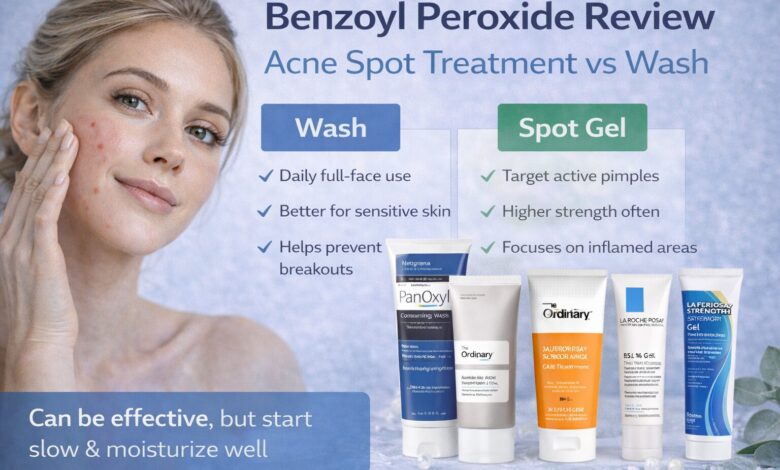
Quick Verdict (Review Summary)
Overall rating: ⭐⭐⭐⭐☆ (4/5)
Best for
-
Inflamed pimples
-
Acne-prone skin
-
People needing an effective over-the-counter acne treatment
Not ideal for
-
Very dry or highly sensitive skin unless used carefully
Benzoyl peroxide is one of the most widely recommended acne treatments, but it must be used correctly to avoid dryness and irritation.
What It Is (Plain English)
Benzoyl peroxide (often abbreviated as BPO) is a common over-the-counter ingredient used to treat acne.
It works mainly by:
-
Reducing acne-causing bacteria
-
Helping inflamed pimples heal faster
-
Supporting clearer skin with regular use
Because of its antibacterial activity, benzoyl peroxide is particularly useful for red, inflamed breakouts.
However, it can also be drying, so starting slowly is important.
Benefits: What It Can and Can’t Do
What Benzoyl Peroxide Can Help With
-
Reducing inflamed pimples
-
Shortening the duration of breakouts
-
Improving overall acne control
What It Cannot Do
-
Prevent every breakout without a consistent routine
-
Replace other supportive skincare steps such as moisturizer and sunscreen
For best results, benzoyl peroxide should be used as part of a complete acne routine.
Who It’s Best For
Benzoyl peroxide is commonly used by people with:
-
Mild to moderate acne
-
Inflamed pimples
-
Acne-prone teen or adult skin
It can be a good option if salicylic acid alone isn’t strong enough to control breakouts.
How to Use Benzoyl Peroxide
When starting benzoyl peroxide, begin slowly to avoid irritation.
Option 1: Benzoyl Peroxide Wash
-
Use once daily
-
Leave on skin 30–60 seconds
-
Rinse and apply moisturizer
This option is often easier for sensitive skin.
Option 2: Spot Treatment
-
Apply a thin layer on active pimples
-
Use once per day
-
Follow with moisturizer
Gradually increase use as your skin builds tolerance.
What Not to Mix (Or How to Separate Safely)
At first, avoid combining benzoyl peroxide with strong actives in the same routine.
Examples include:
-
Strong exfoliating acids
A common strategy is:
Morning: Benzoyl peroxide
Night: Retinol
Another tip: benzoyl peroxide can bleach fabrics, so use white towels and pillowcases.
Side Effects and Patch Testing
Common side effects include:
-
Dryness
-
Peeling
-
Redness
These are usually temporary and improve as skin adjusts.
Important tips
-
Start with a lower percentage
-
Use moisturizer regularly
-
Perform a patch test before full use
If severe burning or swelling occurs, discontinue use.
How to Choose a Benzoyl Peroxide Product
When selecting a benzoyl peroxide treatment, look for:
✔ Lower percentages if you are new to the ingredient
✔ Fragrance-free formulas
✔ Non-comedogenic products
Many people find benzoyl peroxide washes easier to tolerate than leave-on gels.
Avoid formulas that contain high amounts of alcohol, especially if your skin barrier is already irritated.
Starter Routine Example
Morning Routine
Gentle cleanser → Benzoyl peroxide wash (optional) → Moisturizer → SPF
Evening Routine
Cleanser → Moisturizer
(Optional: retinol on alternate nights)
Keeping the routine simple can help reduce irritation while treating acne.
Related Guides
You may also find these skincare guides helpful:
-
acne-skincare-routine
FAQ
Is benzoyl peroxide better than salicylic acid?
They treat acne differently. Benzoyl peroxide is often better for inflamed pimples, while salicylic acid helps unclog pores and blackheads.
What percentage of benzoyl peroxide should I use?
Many people start with lower percentages to reduce irritation. Higher strength is not always more effective.
Can I use benzoyl peroxide with retinol?
Yes, but many people prefer using benzoyl peroxide in the morning and retinol at night to reduce irritation.
Does benzoyl peroxide cause purging?
It may cause temporary dryness or skin adjustment, but true purging is less common than with retinoids.
How long until benzoyl peroxide works?
Some improvement can appear within a few weeks, but consistent use is needed for better results.
Sources
-
American Academy of Dermatology
https://www.aad.org/public/diseases/acne/derm-treat/benzoyl-peroxide -
National Library of Medicine – Benzoyl Peroxide Research
https://pubmed.ncbi.nlm.nih.gov/20394494/ -
Cleveland Clinic – Benzoyl Peroxide Overview
https://my.clevelandclinic.org/health/drugs/19593-benzoyl-peroxide-topical