
Quick Verdict (Review Summary)
Overall rating: 4.5 / 5
Best for:
-
Redness-prone skin
-
Acne + post-acne marks
-
Sensitive skin that can’t tolerate stronger acids
Not ideal for:
-
People who expect instant results
What It Is (Plain English)
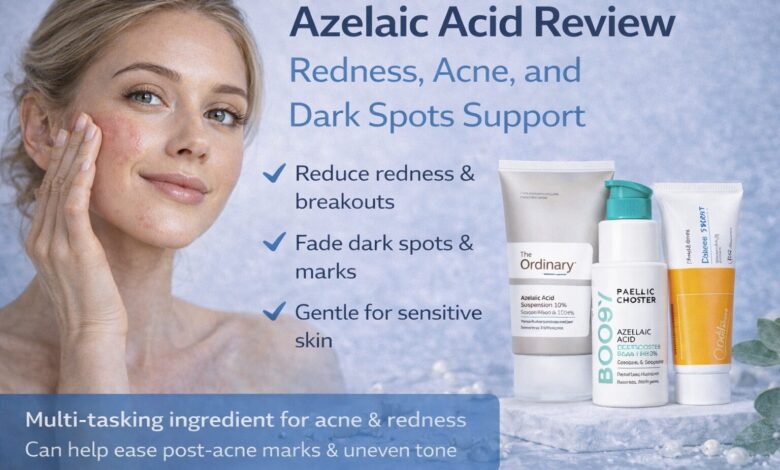
Azelaic acid is a multi-tasking skincare ingredient commonly used to support clearer-looking skin, calm visible redness, and improve uneven tone.
Unlike stronger exfoliating acids, many people find azelaic acid gentler and easier to tolerate, which makes it a popular option for sensitive or redness-prone skin routines.
Benefits: What It Can and Can’t Do
What It Can Help With
-
Reducing breakouts
-
Improving the appearance of redness
-
Supporting a more even-looking skin tone
-
Helping with post-acne marks
What It Can’t Do
-
Replace sunscreen for pigmentation control
-
Treat severe acne on its own
For best results, azelaic acid works best as part of a consistent skincare routine.
Who It’s Best For
Azelaic acid may be a good choice for people with:
-
Acne-prone skin
-
Redness-prone skin
-
Uneven skin tone
-
Sensitive skin looking for a gentler active ingredient
Many dermatologists also recommend it for people who cannot tolerate stronger exfoliating acids.
How to Use It (AM / PM + Frequency)
You can use azelaic acid in the morning or at night.
Beginner routine:
-
Cleanse your skin
-
Apply a thin layer of azelaic acid
-
Follow with moisturizer
-
If used in the morning, finish with SPF
Frequency recommendation
-
Start 3–4 times per week
-
Increase to daily use if your skin tolerates it well
Consistency is more important than using too much too quickly.
What Not to Mix (Or How to Separate Safely)
Azelaic acid usually pairs well with many skincare ingredients.
It often works well with:
-
Hydrating serums
-
Ceramide moisturizers
If you also use stronger actives such as retinol or exfoliating acids, introduce azelaic acid slowly and keep the routine simple until your skin adapts.
Side Effects and Patch Testing
Some people may experience:
-
Mild tingling
-
Light dryness
-
Temporary irritation when first starting
These effects often improve as the skin adjusts.
To reduce irritation:
-
Start slowly
-
Use a good moisturizer
-
Perform a patch test before full use
How to Choose a Product (Buyer Checklist)
When selecting an azelaic acid product, consider the following:
Look for
-
Clearly labeled azelaic acid percentage
-
Fragrance-free formulas (especially for sensitive skin)
-
Lightweight, non-greasy texture
Avoid
-
Highly fragranced formulas if you are prone to redness
A well-formulated product should feel comfortable and easy to layer in a routine.
Starter Routine Example (Simple)
Morning Routine
Cleanser → Azelaic acid → Moisturizer → SPF
Evening Routine
Cleanser → Moisturizer
(Optional: retinol on alternate nights)
If irritation appears, simplify the routine and focus on hydration and barrier repair.
Related Guides
You may also find these guides helpful:
Sources
-
https://www.aad.org/public/diseases/acne/derm-treat/azelaic-acid
-
https://my.clevelandclinic.org/health/drugs/20399-azelaic-acid-topical
FAQ
Is azelaic acid good for acne?
Yes. Many people use azelaic acid to help reduce breakouts and support clearer-looking skin.
Can azelaic acid help redness?
It is commonly used in routines designed for redness-prone skin and may help improve its appearance.
Can I use azelaic acid with retinol?
Often yes, but many people prefer alternating nights to minimize irritation.
How long does azelaic acid take to work?
Most people begin seeing improvements after 6–12 weeks of consistent use.
Does azelaic acid cause purging?
It is less likely to cause purging than some exfoliating acids, though mild adjustment breakouts can occur.
SOURCES
-
American Academy of Dermatology
https://www.aad.org/public/diseases/acne/derm-treat/azelaic-acid -
National Library of Medicine – Azelaic Acid Research
https://pubmed.ncbi.nlm.nih.gov/18561582/ -
Cleveland Clinic – Azelaic Acid Overview
https://my.clevelandclinic.org/health/drugs/20399-azelaic-acid-topical