

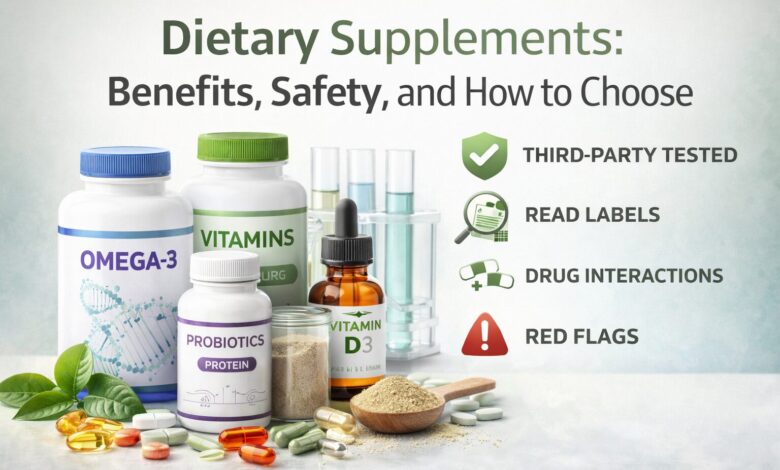
Dietary supplements are everywhere—multivitamins, omega-3, magnesium, probiotics, collagen, herbal blends, detox pills, and energy powders. The supplement industry is growing rapidly, but evidence and product quality vary widely.
Some dietary supplements can be beneficial in specific situations. Many are unnecessary. A few can pose risks if misused or combined with medications.
This science-informed guide explains:
-
What dietary supplements really are
-
Who actually benefits from them
-
How to choose safe, high-quality products
-
How to read supplement labels
-
Common supplement interactions
-
Red flags to avoid
The goal isn’t to buy more supplements—it’s to make safer, smarter decisions.
What Are Dietary Supplements?
Dietary supplements are products intended to supplement the diet. They typically come as capsules, tablets, powders, gummies, or liquids.
They may contain:
-
Vitamins
-
Minerals
-
Amino acids
-
Fatty acids
-
Probiotics
-
Herbal extracts
-
Botanical compounds
Supplements are not medications. They are not designed to treat or cure diseases. Quality, purity, and dosage accuracy can vary significantly between brands.
Do You Really Need Dietary Supplements?
Most healthy adults do not need an extensive supplement “stack.”
In many cases, health improves faster with:
-
Adequate protein and fiber
-
Consistent sleep
-
Regular physical activity
-
Stress management
-
Hydration
-
Proper lab testing when indicated
Supplements are most useful when they fill a documented nutritional gap.
Who Often Benefits from Supplements?
You may benefit from targeted dietary supplements if you:
-
Have confirmed nutrient deficiencies
-
Are pregnant or trying to conceive
-
Follow a vegan or vegetarian diet (e.g., B12)
-
Have limited sun exposure
-
Are an older adult
-
Are recovering from restrictive dieting
-
Have specific performance or digestion goals
Best approach: correct real gaps, not perceived ones.
Supplement Safety: What Most People Get Wrong
1) “Natural” Does Not Mean Safe
Herbal supplements can interact with medications. High-dose vitamins can cause toxicity.
2) More Is Not Better
Megadoses do not guarantee better results. Excess intake of certain nutrients can cause harm.
3) Stacking Can Lead to Overlap
Many products contain similar ingredients. Combining them may exceed safe limits.
4) Supplement Interactions Are Common
If you take medications such as:
-
Blood thinners
-
Antidepressants
-
Blood pressure medications
-
Diabetes medications
Consult a healthcare professional before starting new supplements.
How to Choose Supplements Safely (Step-by-Step)
Step 1: Define Your Goal
Be specific:
-
Improve sleep?
-
Correct a deficiency?
-
Support digestion?
-
Improve performance?
Avoid vague goals like “boost health.”
Step 2: Prioritize Food First
Whenever possible, improve diet quality before adding supplements.
Step 3: Choose Transparent Brands
Look for:
-
Clear ingredient lists
-
Exact dosages (no hidden proprietary blends)
-
Expiration dates
-
GMP-certified manufacturing
Step 4: Prefer Third-Party Tested Supplements
Independent testing reduces risk of:
-
Contamination
-
Incorrect labeling
-
Heavy metals
-
Undisclosed ingredients
Step 5: Start Low and Track
-
Add one supplement at a time
-
Trial period: 2–4 weeks
-
Track benefits and side effects
Supplement Labels Explained
Understanding supplement labels prevents dosing mistakes.
mg vs mcg
-
1,000 mcg = 1 mg
-
Confusing these can result in major dosing errors
%DV (Daily Value)
Daily Value percentages are general population references. They are not personalized medical targets.
Forms Matter
Different forms of the same nutrient may absorb differently and affect tolerance (e.g., magnesium types).
Evidence-Based Supplements
Evidence depends on context, but commonly supported supplements include:
-
Vitamin D (when deficient)
-
Magnesium (sleep, stress, constipation in some cases)
-
Omega-3 (low fatty fish intake)
-
Creatine (strength and performance)
-
Targeted probiotics (strain-specific use)
Not everyone needs these.
Red Flags to Avoid
Be cautious with:
-
“Miracle cure” claims
-
Proprietary blends hiding doses
-
Megadose formulas
-
Aggressive before/after photos
-
Hidden stimulants
-
No physical company address
Safe Supplement Routine (Simple Template)
-
Optimize diet and lifestyle for 2 weeks
-
Perform labs if deficiency is suspected
-
Choose only supplements matching a real need
-
Add one at a time
-
Re-evaluate every 8–12 weeks
Red also
-
Probiotics vs prebiotics →
FAQ
Are dietary supplements regulated?
Regulations vary by country. Quality can vary widely, which is why third-party testing and reputable brands matter.
Can I take multiple supplements together?
Sometimes, but stacking increases risk of overlap and interactions. Add one at a time.
What’s the safest supplement to start with?
It depends on individual needs. Many begin with vitamin D (if deficient), magnesium (if appropriate), or omega-3 if diet lacks fish.
Are gummy vitamins effective?
Some are acceptable, but they may contain added sugars and lower doses. Always check the label.
How long should I try a supplement?
Typically 2–4 weeks for noticeable effects. Nutrient correction may require longer.
References
-
National Institutes of Health (NIH) – Office of Dietary Supplements
https://ods.od.nih.gov/ -
U.S. Food and Drug Administration (FDA) – Dietary Supplements
https://www.fda.gov/food/dietary-supplements -
World Health Organization (WHO) – Vitamins and Minerals
https://www.who.int/health-topics/micronutrients -
National Center for Complementary and Integrative Health (NCCIH)
https://www.nccih.nih.gov/health/herbs-at-a-glance -
European Food Safety Authority (EFSA)
https://www.efsa.europa.eu/en/topics/topic/food-supplements -
USP (United States Pharmacopeia) – Dietary Supplement Verification Program
https://www.usp.org/dietary-supplements -
NSF International – Supplement Certification
https://www.nsf.org/consumer-resources/articles/dietary-supplements -
Harvard T.H. Chan School of Public Health – Vitamins & Supplements Guide
https://www.hsph.harvard.edu/nutritionsource/vitamins/